The George Washington Masonic National Memorial is a tall stone structure situated on a hill near Alexandria, Virginia. It was created by Freemasons in the early twentieth century to celebrate George Washington as both the first president of the United States and a Mason. The structure was inspired by the ancient Lighthouse of Alexandria and was officially dedicated in 1932, coinciding with Washington’s bicentennial. Walking up to it, the building feels like a mix between a monument and a museum, which stands out in the skyline reminding visitors of how Washington has been remembered throughout history.
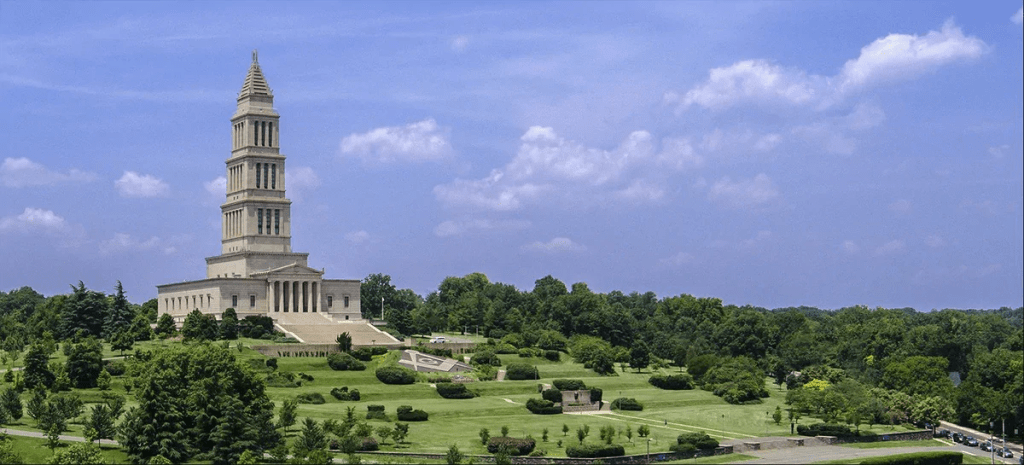
The memorial is given to the public in both traditional and digital formats. Visitors can take guided tours of the hallways, view Freemasonry displays, and even enter a copy of Washington’s lodge room. The observation deck also provides a perspective of the city, making the experience even more unforgettable. At the same time, the memorial offers a virtual tour online. This digital option makes it accessible to folks who are unable to go to Virginia or who have mobility issues. This combination of physical and online display helps to preserve history while also making it accessible to a wider audience.
Its significance comes from how it relates Washington’s image to larger themes of leadership, memory, and civic identity. It demonstrates how societies, particularly Freemasons, sought to honour him via building and common rituals. At the same time, it demonstrates how history is created not only by facts, but also by how people choose to remember and appreciate figures such as George Washington. In keeping with Cohen and Rosenzweig’s introduction, the online tour exemplifies the benefits of digital history, such as accessibility and broad reach. A building on a hill is only accessible to those who can climb it, whereas a virtual tour can reach classrooms and homes all over the world.
The intended audience is diverse, including tourists, scholars of American history, locals, and Masons. For visitors, the eye-catching design and guided tours provide for an unforgettable experience. For students and teachers, online tools make it easy to plan courses or delve deeper into Washington’s history. It tells its story effectively, yet it faces several obstacles. Some tourists may just regard the monument as a spectacle, failing to appreciate its historical significance. To be accurate and accessible, online resources must be regularly updated.
Overall, the memorial serves well as a piece of public history through its combination of teaching and commemoration. Academic history is frequently published in books and journals, but public history must involve a larger audience. This site achieves this by combining traditional exhibits and electronic features. It demonstrates how history may be kept in stone and shared digitally, providing people with multiple ways to engage with the past.
 My Blog
Leave a comment